Impact of Tofu, Mofu and Bofu Funnel Strategy in Digital Marketing: Are You Ready?
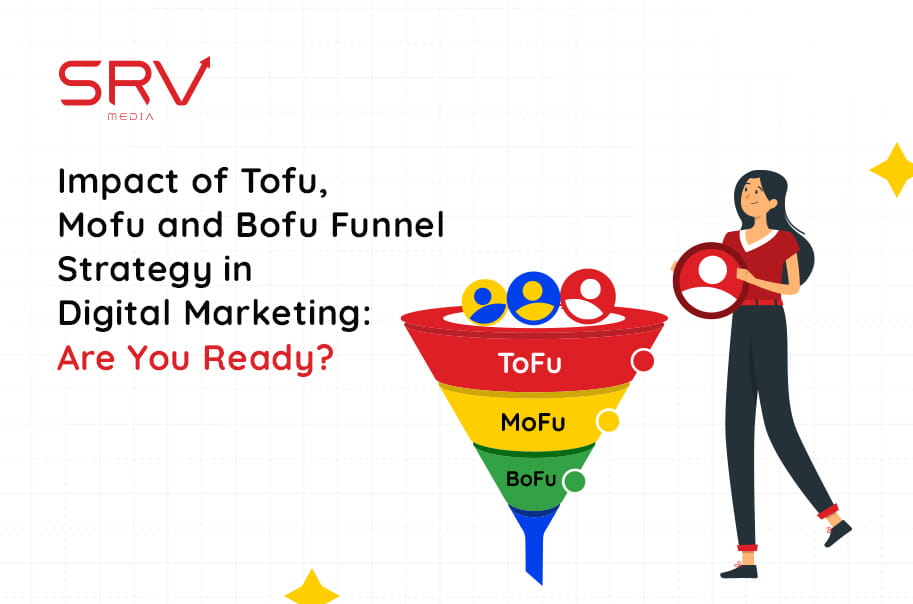
Marketing or Sales funnel as it is called, has a long history dating back to 1898. It was Elias St. Elmo Lewis; an American advertising advocate who developed the concept that outlines a customer’s phases of the journey that leads to a successful sale. He introduced the AIDA marketing model which we know as the sales or marketing funnel.
The concept is, before making a purchase a buyer goes through four stages; Awareness (where the buyer has a problem and knows about it), Interest (shows interest in products or services that could possibly solve the problem), Desire (has made an unofficial decision on a specific product or service) and finally Action (makes a purchase). These four stages can be visualized in the form of a funnel, and that’s how AIDA transformed into a marketing funnel.
How Well Do You Understand the 3 Stages of the Marketing Funnel ?
The businesses use different content to target the 3 stages of the marketing funnel to nurture a buyer or lead to making a purchase. We will discuss each one, and also your tofu, mofu bofu strategy, and the business impact of using a full marketing funnel tofu mofu bofu.
TOFU: top of the funnel
The buyer is at the Awareness stage of our AIDA model and is at the top of the funnel. The buyer knows a problem and is looking for a solution, but is not aware of your brand. The buyer is searching. It’s a research-driven stage and a buyer wants information and answers.
Your TOFU Content Strategy
Objective: to get a buyer’s attention.
- Increase website visitors through useful SEO content that includes informative blogs ( such as how-tos and top tips) in your area of expertise.
- Increase social media traffic by sharing content from your website and other sources. Promote your website blogs on social media.
- Use lead-capture Forms on your website (the pages that get high traffic) and social media platforms. Aim for collecting the contact information of 2% of your visitors.
- Well-crafted call-to-action (CTA) buttons are very important for website and social media pages.
- Examples include: Blog posts, Research reports, E-books, White papers
MOFU: Middle of the funnel
At this stage, a buyer evaluates various options and if your brand gets visible might keep your product or service in the consideration list.
Your MOFU Content Strategy
Objective: educating and trust building.
*Provide valuable, informative content that addresses the specific problem or pain point of the buyer.
- Pushy and salesly content is a strict no-no.
- You are at a relationship-building stage, or lead nurturing stage; provide appropriate content.
Examples include in-depth blog posts, whitepapers, ebooks, videos, webinars, and case studies. Case studies bring actionable insights and real-world examples and help in trust-building.
Also Read : Get Ready to Change Your Digital Marketing Game with AI
BOFU: bottom of the funnel
This is the end stage of a buyer’s (known as a qualified lead) funnel journey and about to make a purchase from you; if you manage to nurture the lead till this stage. Such a lead just needs a little push to purchase in the form of extra reassurance, incentive, or additional urgency (in the form of a limited time discount, for example).
Your BOFU Content Strategy
Objective: Project your brand’s unique selling propositions, that set you apart from others.
- The matured lead now needs proof that your solution will deliver the expected result or ROI. Something to give one hundred percent conviction to purchase from you and none else.
- Although overt selling could be the most appropriate at this stage, it is better to take a conservative approach to allow the lead to decide.
- Make tailor-made content addressing the pain point of the lead; as if you are assuming the lead is going to buy from you.
- Content reinforcing that your product or service is a less risky purchase will help. For example, mentioning more warranties, 24/7 customer support, etc.
- Examples include Case studies, Vendor comparisons, Live demos, Free Trials, Free Consultations etc.
The Business Impact: How Strong Is Your Tofu, Mofu, Bofu Approach?
It is wise to adopt a full-funnel marketing strategy to attract a prospective buyer, convert to a lead, nurture the lead, and finally turn the lead to a buyer. Keep nurturing the lead in a positive yet gently persuasive way aiming at building a relationship and offering value; instead of plunging into an outright transactional approach.It will help in trust-building for your brand. With time, your audience will start seeing you as an industry leader. They will have confidence that your brand design service serves their purpose.
The advantages you will reap out of it are massive. A survey reported the following stats:
- 95% of buyers wanted to purchase from a brand that gave them enough content to sail through each stage of the buying process, that is from information to conclusion.
- 68% of buyers mentioned they felt more confident and positive about a brand after consuming content.
- 82% of buyers reviewed a minimum of 5 pieces of content from a brand before finalizing it.
Besides, a full-funnel marketing strategy improves the customer lifetime value (CLV). CLV is the total revenue you can expect to earn from a customer over the entire time of the relationship.
What Should Be Your Tofu Mofu Bofu Strategy for Full-Funnel SEO Marketing?
The marketing funnel is all about a buyer’s, visitor’s, or audience’s journey, But your buyer’s search behavior changes throughout this journey. Hence your SEO strategy must align to it. You can use a three-pronged approach:
1.Keyword research
2.Content
3.Website architecture
1.Keyword research
Your keyword research needs to be different for each stage.
a) Tofu Keyword Research
- Look for general search queries related to the pain points your brand addresses.
- Also, consider the broader interest-based searches your prospective buyer would make.
- Look for keywords with Who, What, When, Where, Why and How.
- Examples are “How to”, “tips”, “what is”, “strategies”, “where to”
b) Mofu Keyword Research
- At this evaluation stage, use keywords that relate to the solution your brand provides.
- Also, use evaluative or comparative keywords such as “best”, “maximum”, “only” etc.
- Examples: reviews, compare, benefits, why choose
c) Bofu Keyword Research
Since your nurtured lead is at the final stage of their decision-making process, you can use conversion-driven keywords.
Examples: Buy now, pricing, deals, get a quote, talk to, free trial, sign up, etc.
2.Content
a) TOFU content (demand generation)
Here is a list of tofu content you can use:
- Blog posts
- Videos
- Podcasts
- Guides
- Ebooks
- Infographics
- Webinars
- Templates
- Checklists
b) MOFU content (lead generation)
The list includes:
- Blog posts
- Videos
- White papers
- Original research and reports
- Case studies
- Product tips and tutorials
- Webinars
- Events
c) BOFU content (sales)
Use these types of content:
- Product demos
- Product tutorials
- Video product walk-throughs
- Product webinars
- Detailed case studies
- Customer features
- Calculators
- Tools
- Comparison charts
3) Website architecture
Plan to bring visitors from your website to your marketing funnel. Have a site architecture that has a clear path from the home page to each funnel stage. Internal links will help to move your visitor through the funnel. Your home page can have different sections with internal links that can lead the visitor through.
- Tofu – a tofu visitor can be led to the Resources section to read more about your solutions.
- Mofu- a mofu visitor can be led to hover over the Solutions category and click on the industry for more personalized content. The visitor can also be encouraged to sign up for a webinar or explore Research & Reports.
- Bofu- a bofu visitor can be encouraged to watch video demos, read testimonials, go through a case study, or click the prominently-placed “schedule a free demo” button.
Conclusion
Incorporating a full-funnel tofu mofu bofu strategy can transform how your brand nurtures leads and builds lasting relationships, turns them into buyers, and increases CLV. By using tailored content and SEO approaches at each stage, you create trust and guide potential buyers through their journey seamlessly. The result? Higher conversions, deeper loyalty, and a brand that stands out.
Frequently Asked Questions
What is a TOFU marketing strategy?
A TOFU marketing strategy focuses on attracting a broad audience at the awareness stage. It uses educational and problem-focused content to build visibility and trust. The goal is to introduce your brand without pushing for immediate conversion.
What is the difference between TOFU and BOFU content?
TOFU content targets users who are exploring problems, while BOFU content targets users ready to make a decision. TOFU builds awareness and traffic. BOFU supports conversions through solution-focused and action-driven content.
What is the MOFU strategy?
A MOFU strategy focuses on users who are evaluating options and comparing solutions. It provides detailed information, benefits, and differentiation. The goal is to build trust and guide prospects closer to a purchase decision.
What are the types of top of funnel content?
Top of funnel content includes blog articles, guides, social media posts, infographics, and educational videos. This content addresses common questions and problems. It aims to attract new users and increase brand awareness.